Standing on a 1 acre lot and picturing your future home is exciting. It is also a big decision that can affect your build budget, timeline, and long‑term value. If you are comparing homesites in Benders Landing Estates in Spring, a clear checklist will help you separate a beautiful setting from a smart purchase. In this guide, you will learn what to look for on the ground, what to request in writing, and how community rules shape what you can build. Let’s dive in.
What Benders Landing offers
Benders Landing is an acreage community in south Montgomery County with 1 to 2 plus acre homesites, private lakes, trails, and a clubhouse with pool and sport courts. The HOA maintains deed restrictions and an Architectural Control Committee that reviews new construction and exterior changes. You can confirm the community structure and access governing materials from the official HOA site at benderslanding.org.
Many buyers are drawn to lakefront lots and wooded settings. The estates marketing pages outline the amenity mix and highlight that sections may differ, including one gated area. Review the amenities and community overview on the developer’s site at Benders Landing Estates.
Listings often reference no MUD taxes and a low tax rate. Always verify the current tax bill for the specific parcel before you purchase. Properties are zoned to Conroe ISD; confirm attendance boundaries with the district when you are evaluating your exact address.
Start with the rules: HOA and ACC
Before you fall in love with a view, confirm what you can build. The HOA posts deed restrictions and ACC materials by section. Because Benders Landing is split into multiple sections, read the exact deed restriction document and any ACC resolutions for your lot’s block and section. You can locate the public folders and request section‑specific PDFs through the HOA FrontSteps portal.
Expect controls on items like minimum square footage, exterior materials, roof pitch, driveway orientation, fence height, pools and outbuildings, and tree‑removal rules. If you are eyeing the Castle Court gated section, note that it advertises a faster new‑construction review, which may differ from other sections. See the section overview on the Castle Court page.
On‑site lot evaluation checklist
Orientation and sun
Orientation affects natural light, summer heat gain, and how you use outdoor spaces. Ask your builder to place a sample floor plan on the lot survey with true north marked, then review window exposure, porch placement, and shade strategies. For design basics, see the Energy Department’s guidance on passive solar home design.
What to request:
- Survey with north arrow and recorded setbacks.
- A siting sketch that shows the proposed home footprint and driveway.
- A simple sun‑path diagram for main living areas and outdoor rooms.
Trees and canopy
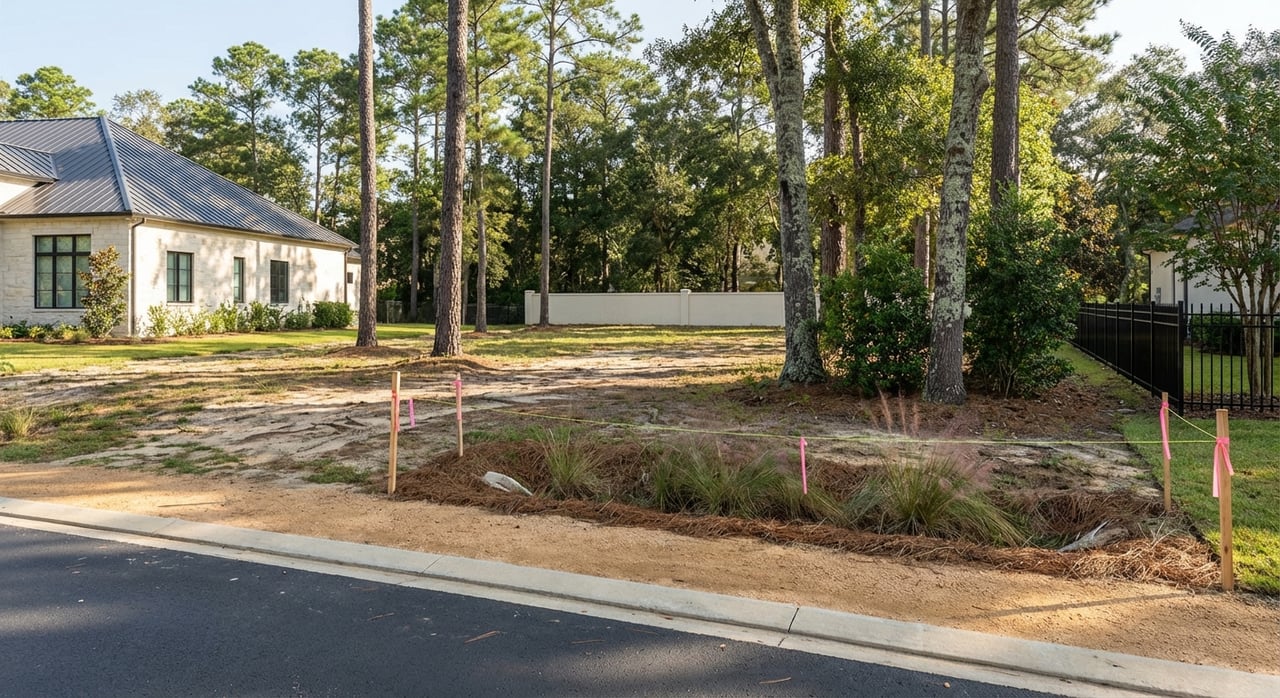
Mature trees add privacy and market appeal. They can also limit your footprint and require protection during construction. The community highlights preserved trees and wooded settings on the estates overview, and the HOA regulates tree removal.
What to request:
- The HOA’s tree‑removal and mitigation rules for your section from benderslanding.org.
- An on‑lot tree inventory from the seller or an arborist.
- Your builder’s tree‑protection plan for root zones and utility trenches.
Views, water, and greenbelts
Lakefront and lake‑view homesites often carry a premium and may include extra shoreline, bulkhead, or buffer rules. Interior and greenbelt lots trade water views for privacy and simpler maintenance. Your recorded plat and survey are critical.
What to request:
- The recorded plat sheet that shows lakes, buffers, easements, and building setback lines.
- A current survey that marks build lines and any waterfront features.
- Written confirmation of shoreline or bulkhead maintenance responsibility, if applicable.
Topography, drainage, and flood risk
Spring and the Spring Creek area have complex drainage patterns. Some lots may require fill, elevated slabs, or additional stormwater measures. Always check FEMA maps and ask about finished floor elevation.
What to request:
- FEMA FIRM panel and a printable FIRMette for the lot from the FEMA Map Service Center.
- Any Letters of Map Change for the parcel.
- HOA or developer drainage plans and any private drainage easements for your section, available through benderslanding.org.
Red flags include standing water after rain, low spots near mapped floodplains, and a lack of defined drainage paths.
Soils and foundation
Much of the Houston area has expansive clay soils that move with moisture. A site‑specific geotechnical report informs foundation type, pier depth, and under‑slab drainage, which can change your budget.
What to request:
- A soils report with borings on your specific lot before finalizing plans.
- Your engineer’s foundation recommendations based on that report. You can review technical guidance on expansive soils via the USACE manual summarized here: Foundations in Expansive Soils.
Utilities and taxes
Utilities vary by section. Some lots tie into public water or sewer, while others may require a private aerobic septic system. Utility type affects permitting, pool placement, and long‑term maintenance. Marketing notes the community has no MUD taxes, but verify for your parcel.
What to request:
- Written confirmation of providers for water, sanitary sewer or septic, electric, gas, and fiber.
- Location of service lines and taps on the survey.
- The current tax bill, including county, school district, and any special district items, to confirm any no‑MUD claim cited on the estates site.
Easements, setbacks, and build lines
Your true buildable area is defined by recorded setbacks and easements, not just lot size. These lines affect your home footprint, pool, and accessory buildings.
What to request:
- A certified boundary survey showing all recorded building setback lines, drainage, and utility easements.
- The recorded plat and your section’s deed restrictions from the HOA at benderslanding.org.
Privacy, access, and adjacencies
Consider how the lot relates to streets, neighbors, lakes, or greenbelts. Proximity to I‑45, Grand Parkway, and the Hardy Toll Road supports regional access. The community highlights convenient access on the estates overview. Ask about any planned road projects that could change traffic patterns over time.
Architectural controls and resale
ACC rules and neighborhood precedents shape design choices and protect long‑term value. Minimum home size, exterior materials, fence height, and accessory structures all factor into total project cost. For market context and a neighborhood snapshot, review the Benders Landing overview on Neighborhoods.com, then compare recent closed sales in your exact section using your agent’s MLS resources or an ATTOM report like this sample property record.
Step‑by‑step due diligence
Use this sequence to keep your lot search focused and efficient:
- Gather core documents
- Request the recorded plat and a certified survey that shows setbacks, lakes, buffers, and easements. The HOA site at benderslanding.org often points to governing documents by section.
- Confirm HOA and ACC rules
- Obtain the correct deed restriction section, ACC Guidelines, application forms, fee schedule, and any fence or tree resolutions from the FrontSteps public folder. Ask for recent ACC approvals nearby to understand precedent and timing. If considering Castle Court, verify the advertised faster review on the section page.
- Check flood status early
- Pull a FIRMette from the FEMA Map Service Center. If the lot is in or near a mapped flood zone, require an Elevation Certificate and confirm finished floor elevation above base flood.
- Order key site investigations
- Commission a geotechnical report and, if trees are important to your plan, an arborist inventory. Review the USACE guidance on expansive soils here: Foundations in Expansive Soils.
- Verify utilities and taxes
- Get utility provider names and service locations in writing and confirm with the provider. Request the current tax bill to verify any no‑MUD statement cited on the estates overview.
- Align plan and site
- Have your builder produce a simple siting plan that shows orientation, driveway, pool, septic or sewer connection, tree‑protection zones, and preliminary drainage so you can preview ACC readiness.
- Validate market value
- Compare recent closed lots and finished homes in your exact section to quantify premiums for lakefront, greenbelt, cul‑de‑sac, or interior sites. For context, review the neighborhood profile on Neighborhoods.com and a sample ATTOM property report.
How lot choice shapes long‑term value
- Lakefront or lake‑view: Strong lifestyle appeal and often higher resale liquidity. Expect possible shoreline or bulkhead rules and defined buffers. Confirm maintenance obligations in writing.
- Deep, wooded sites: Privacy and shade can lift value. Preserve desirable canopy when possible. Clearing for a larger footprint may trigger HOA tree‑mitigation requirements and higher site costs.
- Corner vs. interior: Corners may allow more design flexibility but can trade privacy for exposure. Interior or greenbelt lots often feel more private and can move faster on resale. Use section‑specific comps to check days on market.
- Septic or private systems: Septic adds permitting, maintenance, and siting limits for pools and accessory structures. Verify setbacks to wells or lakes and confirm future expansion options.
- Drainage‑sensitive areas: Lots near mapped floodplains or low corridors may require elevated slabs and more robust stormwater plans. Always check FEMA maps and request elevation data early.
- Strong ACC controls: Well‑enforced guidelines protect neighborhood character and values, though they can add time and cost up front. Lax enforcement can reduce uniformity and predictability. Read the rules and ask for recent approvals.
Ready to compare specific lots, walk a homesite, or pressure‑test a plan against HOA rules and site realities? Connect with Janet Chavez for a focused, concierge approach grounded in local micro‑market knowledge and design‑minded guidance. Hablamos español.
FAQs
What documents should I review before offering on a Benders Landing lot?
- Request the recorded plat, a certified survey, your section’s deed restrictions, ACC Guidelines, current ACC forms and fee schedule, and the current tax bill from the seller and HOA at benderslanding.org.
How do I check flood risk for a specific homesite in Spring, TX?
- Search the property address at the FEMA Map Service Center to download the official FIRMette and ask for an Elevation Certificate if the lot is in or near a mapped flood zone.
Are there MUD taxes in Benders Landing Estates?
- Community materials often state no MUD taxes, but tax status varies by parcel. Verify the current tax bill components for the exact lot before you buy using documents cited on the estates overview.
Does the HOA regulate tree removal when building?
- Yes. The HOA’s deed restrictions and ACC guidelines include tree‑removal and mitigation rules by section. Request the current documents from the HOA site at benderslanding.org.
How fast is ACC approval for new builds?
- Timelines vary by section. Castle Court advertises faster new‑construction review, while other sections may differ. Confirm the exact ACC process and timeline for your section in writing using the Castle Court page and HOA materials.
Do utilities differ by section in Benders Landing?
- Yes. Some lots use public water and sewer, while others may require an aerobic septic system. Get provider names, service locations, and any septic requirements in writing and confirm with the HOA and utility providers.